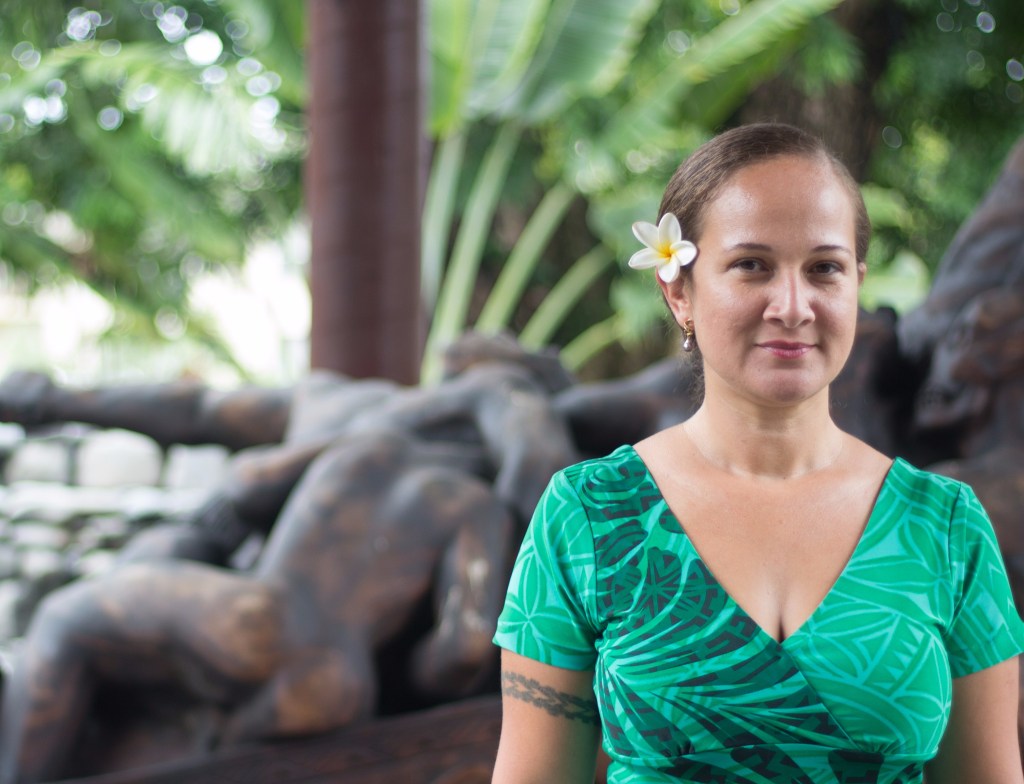
Dr. Lagipoiva Cherelle Jackson has been part of Samoa’s climate negotiating teams, contributing to international climate processes where decisions directly affect Pacific Island sovereignty, mobility, and long-term viability. Her work in negotiation spaces reflects practical engagement with climate diplomacy and an understanding of how global commitments translate into local consequence for Small Island Developing States.
Her policy practice also includes work as an oceans policy advisor, contributing to approaches that recognize the ocean as a climate system rather than a standalone sector. This perspective reflects Pacific realities, where climate change, ocean health, food systems, livelihoods, and culture are inseparable within policy formulation.
Climate Communications Strategy and Policy Translation
A core component of Lagipoiva’s work focuses on climate communications as policy infrastructure. She has drafted and shaped climate communications strategies for national governments and international institutions, translating complex climate frameworks into narratives that are accurate, culturally grounded, and usable across policy, media, and community contexts.
Her work includes developing climate communications strategies for the Government of Niue, the United Nations Development Programme, Conservation International, and the International Labour Organization’s Small Island Developing States programming. Across these engagements, her focus has been on clarity, accountability, and ensuring policy intent is communicated in ways that reflect lived experience.
Policy, Narrative, and Power
Lagipoiva’s work examines how narrative shapes climate governance and public understanding. She engages across climate negotiations, policy interpretation, and strategic communications to address how language, framing, and omission influence which priorities are elevated and which are sidelined in climate decision-making.
Her practice centers Indigenous knowledge systems and frontline perspectives, challenging extractive and deficit-based climate narratives. By interrogating how climate stories are constructed, she works to ensure policy discourse reflects the realities of communities most affected by climate change.
Gender, Climate, and Collective Practice
Lagipoiva is a co-founder of Women in Climate Change, a collective initiative that emerged in response to the persistent exclusion of women’s expertise from climate policy, science, and communications spaces, particularly in Indigenous and Global South contexts.
This work focuses on visibility, participation, and equitable representation within climate processes, recognizing that more inclusive policy environments lead to stronger, more grounded climate outcomes.
 lagipoiva